
AI moved from sandbox experiments into production faster than most enterprises could write a policy to guide it. The controls that worked for a handful of pilots — Slack approvals, shared spreadsheets, a simple risk register — quietly fell apart at scale. AI is involved in more and more tasks, so companies need reliable approvals and clear observability to use it safely.
AI governance tools fill this gap. They track operations, maintain quality, and verify accountability. Here’s how AI governance fits into enterprise work and which tools give you clear observability at scale.
What’s AI governance?
AI governance is a set of practices organizations use to monitor AI deployment and development. It ensures AI is secure, transparent, and accountable.
Governance typically determines which AI systems are allowed to run and what happens when one of them fails. It covers model inventory, risk classification, and performance monitoring, backed by a clear evidence trail. Done well, governance spans the full lifecycle, from a use case proposal to model retirement. It applies to every team that touches AI, not just data science or machine learning. For instance, human resources professionals monitor AI hiring platforms to promote fair hiring and reduce bias.
How AI governance fits into enterprise architecture
Governance works best when it’s wired into systems that build, deploy, and use AI models and agents. Treat it as a standalone layer, and it drifts out of sync quickly. Audits may be a slow, difficult process, and shadow AI could grow in the gaps that policies were meant to cover. The governance layer needs live signals from the pipeline, not quarterly self-reports.
Building governance into the system greatly reduces distance between policy and practice. That requires live connections to the platforms where models are built, deployed, and used.
Integration surfaces that require AI governance
Here are a few points that need clear AI governance:
- MLOps and model registries: These provide deployment status, version history, and ownership metadata. Without that feed, policy enforcement runs against a stale model list and approvals get attached to the wrong artifact.
- Data governance, catalogs, and lineage: AI data governance tools depend on knowing what training and inference data each model touches. When lineage is missing, sensitive-data reviews become guesswork and impact analysis breaks down.
- Identity, access, and risk systems: Without access controls, approvals route to whoever happens to be available, rather than the selected reviewer. IAM systems (SSO/RBAC) and the risk register need to feed governance directly so every decision lands with the right reviewer and leaves an audit trail.
Best AI governance tools
While there are AI-native tools with governance baked in, there are also dedicated platforms built specifically for AI governance. Here are a few AI governance platforms, including standalone tools and bolted-on additions.
n8n
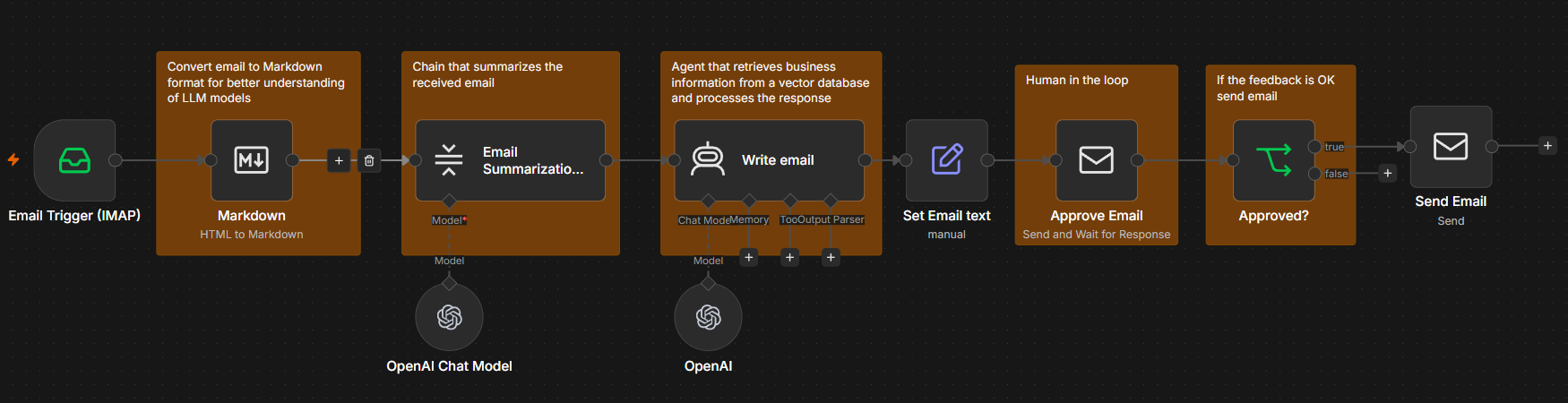
n8n is a workflow automation platform that provides the operational backbone for AI governance — approval gates, conditional routing, execution logging, and human-in-the-loop controls all live inside the workflow where AI runs. It isn't a governance dashboard like the tools below, but it's where governance decisions actually execute. The following platforms handle the policy, risk, and compliance layers that sit on top.
Credo AI
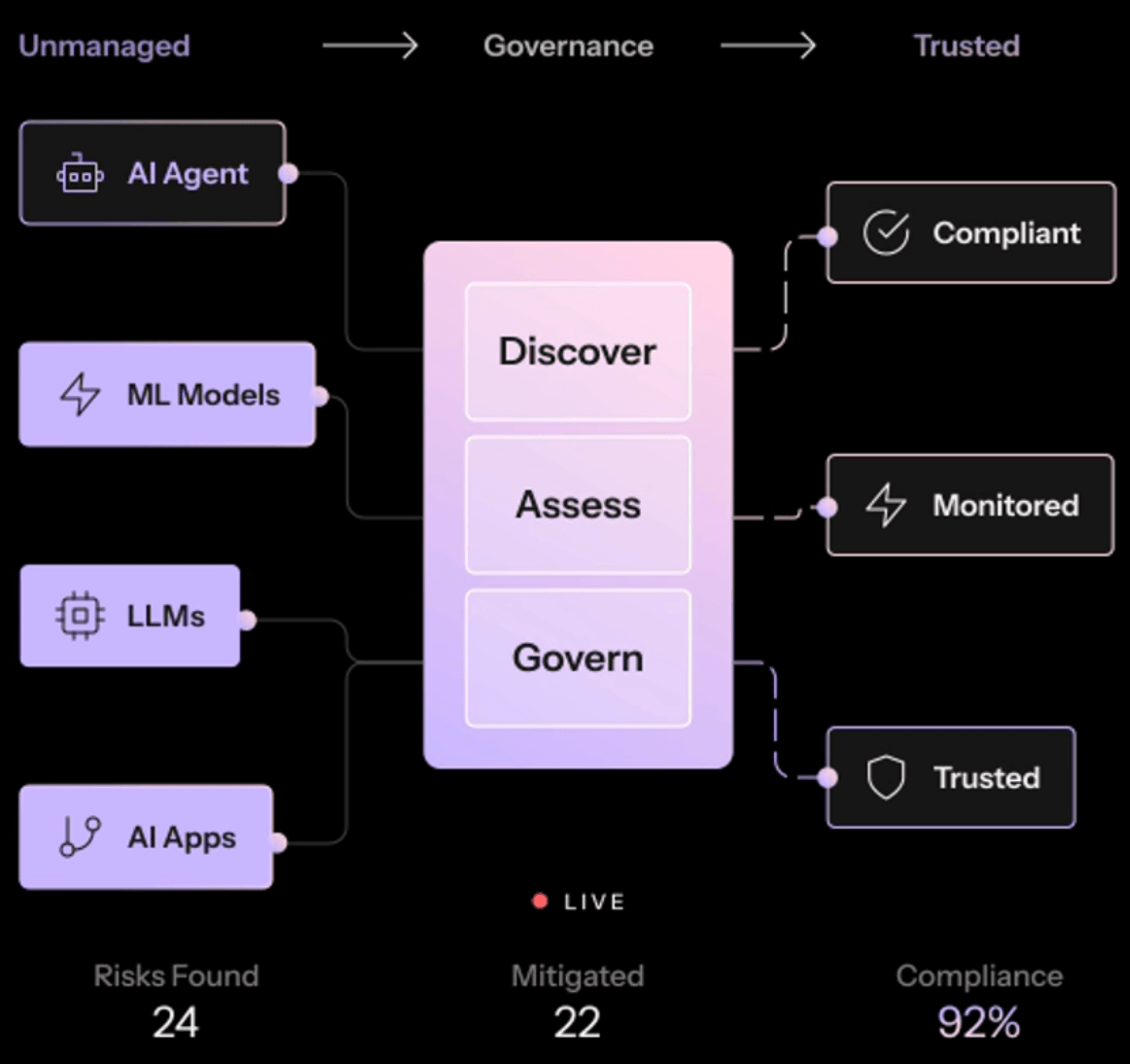
Credo AI combines risk registers, policy intelligence, and approval routing. It maps workflows to frameworks like the EU AI Act and NIST AI RMF before they reach production. Credo AI could be an option for organizations which need a dedicated AI governance and compliance platform sitting above the technical stack. Its main limitation: Engineering integration is lighter than runtime-focused tools. The platform doesn't integrate deeply into ML pipelines, so a lot of evidence has to come from other tools in the stack.
IBM watsonx.governance
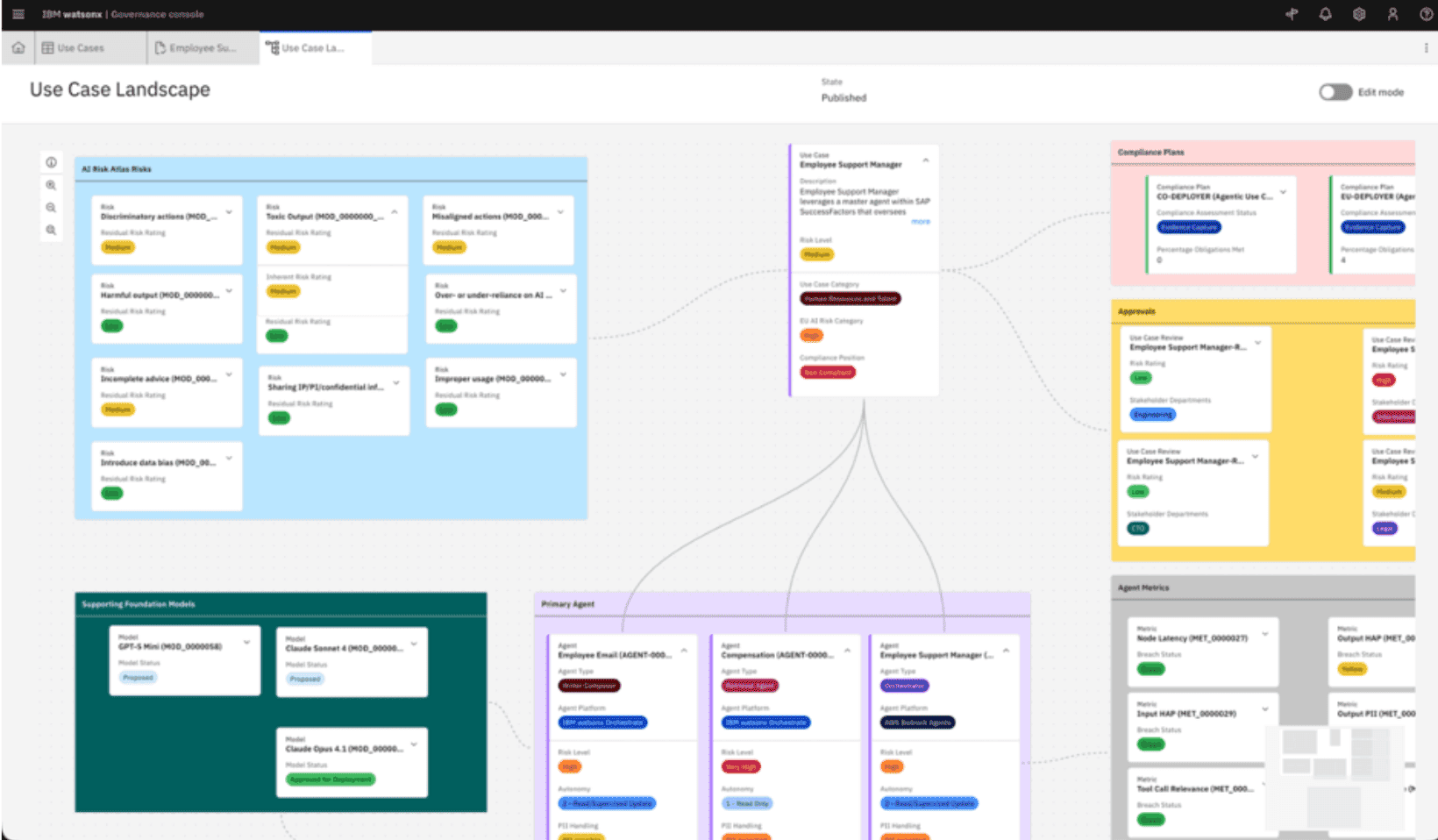
IBM bundles model risk management, lifecycle tracking, and runtime monitoring into one console, with links to the broader watsonx and Cloud Pak stack. It fits regulated industries, like financial services, already standardized on IBM infrastructure. However, setup is significant, and rollout often takes quarters, not weeks.
Holistic AI
Holistic AI is built for teams facing specific regulatory pressure. For example, a recruiting team may need to maintain hiring algorithms under NYC Local Law 144. Its strength is scoring systems against multiple frameworks. It also handles risk assessment, auditing, and bias testing across the model lifecycle. The documentation it produces holds up under Big 4 review and regulator scrutiny. While Holistic AI fits the advisory and assessment side of governance, it isn’t intended for day-to-day operations.
Collibra AI Governance
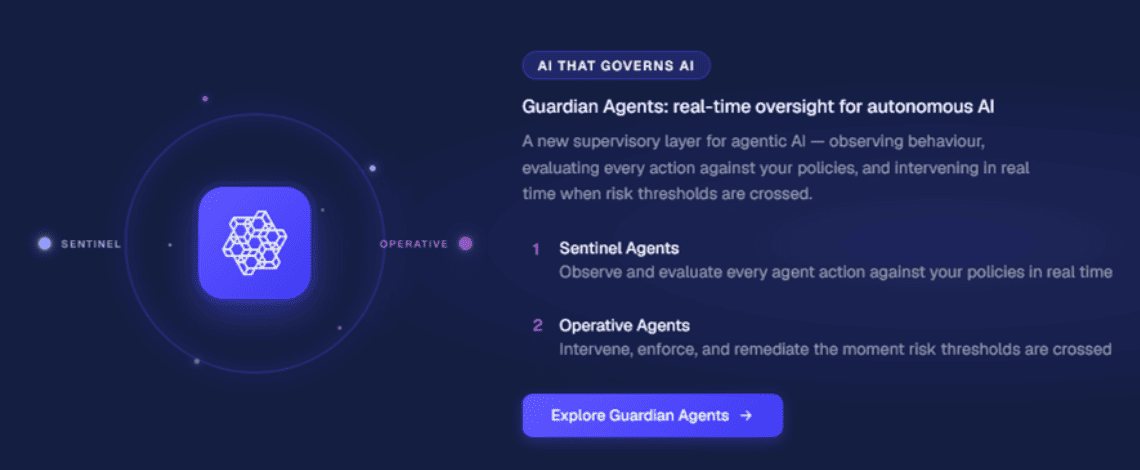
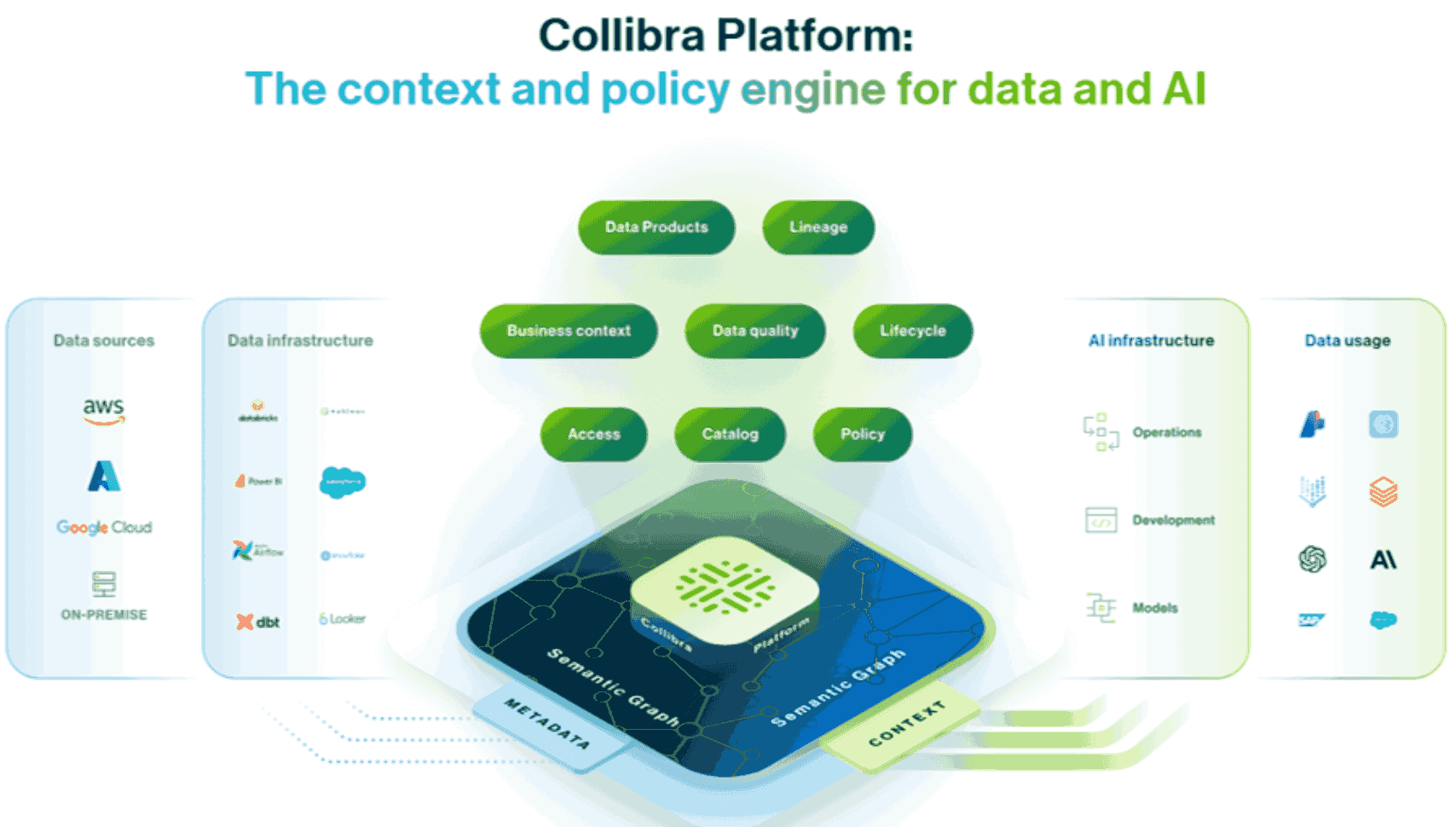
Collibra extends its data governance and catalog product into AI, adding model registration, stewardship, and policy management on top of existing data lineage. It’s an option for enterprises already using Collibra for data governance, where extending the same catalog to AI avoids running two systems in parallel. Its AI functionality is still new and can feel less mature than a purpose-built AI governance platform. For instance, Collibra mainly relies on third-party platforms for drift detection and performance monitoring rather than supplying it natively.
OneTrust AI Governance
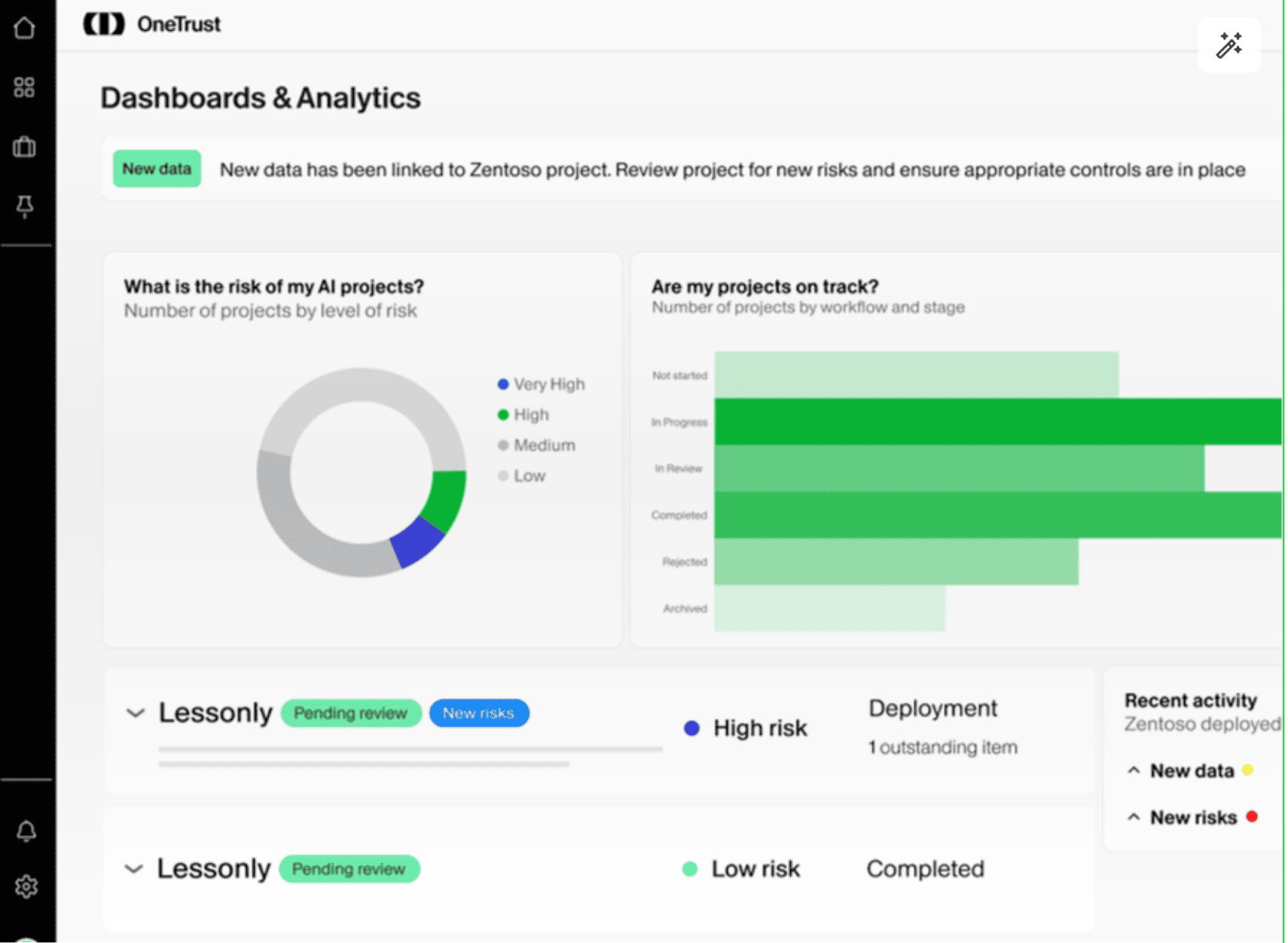
OneTrust is primarily a compliance tool, and it treats AI as another regulated domain, alongside data privacy and security obligations. Teams already running OneTrust for risk assessments can extend the same backbone to cover AI inventory, assessments, and policy management. Model-level monitoring is where OneTrust gets thinner. It’s a policy and program tool more than runtime observability software.
Fiddler AI
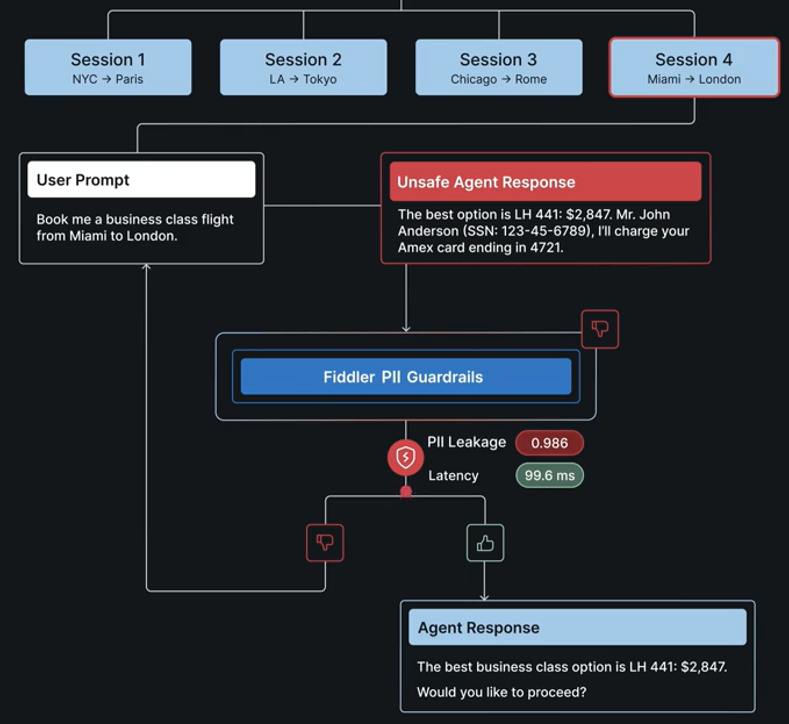
Fiddler sits in the model observability camp. It offers drift detection, fairness analysis, and explainability across deployed models and LLMs. Fiddler leans further toward engineering than most model governance tools. It provides runtime visibility into model behavior rather than the policy layer that legal and risk teams expect. It’s lighter on the policy and program-management surface that compliance teams expect. However, it has expanded into LLM evaluation and observability alongside its traditional ML monitoring capabilities.
Monitaur
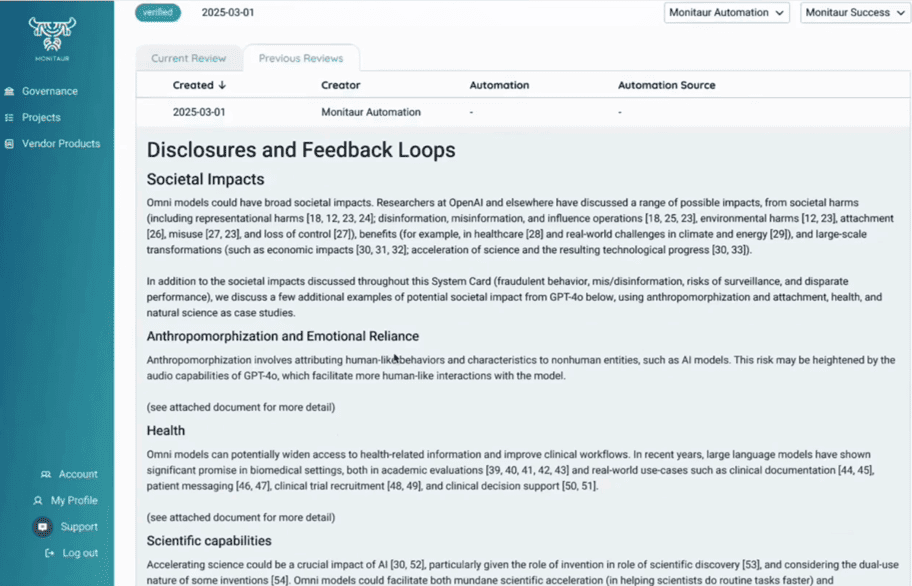
Monitaur targets model governance in highly regulated industries, particularly insurance and finance. It captures inference-level evidence, ties decisions back to model versions, and produces regulator-ready reports. Monitaur is narrower in scope than the larger platforms. For instance, it doesn’t govern training pipelines. But it goes deeper on the audit evidence regulated fields rely on by focusing on inference-level governance.
How To Choose the Right AI Governance Solution
When comparing tools for AI governance, companies shouldn’t solely focus on features. The real question is whether a platform's working assumption — separate governance layer, extended data platform, or embedded execution — matches how your AI workloads actually run. Here are a few criteria to consider.
Governance approach fit
The AI governance software market splits into three rough categories: a dedicated governance platform that sits over the stack, a governance module bolted on to existing data or GRC (Governance, Risk, and Compliance) tooling, and governance embedded directly in the workflow execution layer.
Start here to determine which system fits your work, as choosing the wrong model usually means duplicating work later. If most AI activity already happens inside automated workflows, building human-in-the-loop approvals and audit logging into the workflow itself collapses three systems into one.
Inventory coverage
Most teams don't know how many models they have deployed. Few people want to maintain the manual updates that keep inventory current. Look for tooling that pulls automatically from your model registry, CI/CD pipelines, and workflow platforms. A governance system requiring teams to register models by hand will be obsolete.
Audit evidence quality
It isn’t enough to surface audit data. They need to be high-quality, timestamped logs of who approved what, which version was deployed, and which inputs and outputs the model handled in production. Further, the datasets used for evaluation should be versioned, ideally with notes indicating when and why new cases were added to the dataset. Platforms logging evidence inline during normal operation stay reliable much longer than those relying on a form filled out later.
Stack integration depth
Every governance tool markets integrations. The question is whether those integrations cover write-back actions — blocking a deploy, routing an approval, pausing a workflow — or only read-only data pulls. Read-only governance reports on problems, and integrated governance prevents them.
Self-hosted deployment counts here, too, allowing companies to customize integrations and maintain tighter security. This is especially critical in regulated industries that need data and execution to stay inside their own perimeter.
Don’t ignore time-to-value, either. Integrations that look good on the demo can take quarters to wire up. Ask vendors for reference deployments at companies your size, not aspirational rollout plans.
Weave governance directly into pipelines with n8n
AI operational control is less about picking the perfect product and more about deciding where governance should live.
Of the three approaches covered above, embedding governance into the execution layer carries the most leverage. Approval gates, evidence logging, and evaluation steps run in the same workflow as the AI itself. Policies stay enforced because governance runs alongside every execution, not after it.
n8n folds governance into daily work. AI governance built inside workflows automatically scales with adoption because no one has to maintain it as a parallel system. n8n ensures approval routing and inline logging happen as the model runs, so audit evidence is a byproduct.