
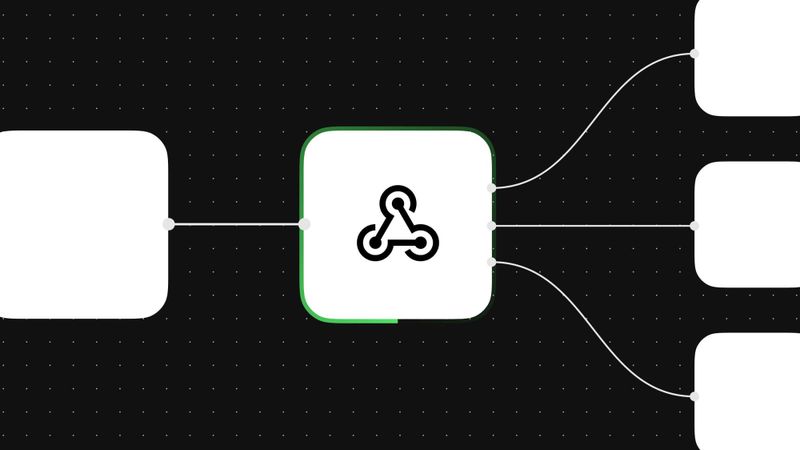
A user checking out a cart, a confirmation notification being sent, and the decreasing of inventory levels are just a few of the typical actions seen in modern applications.
Synchronous environments rely on direct API calls for these actions, but this creates tight coupling. One slow service blocks the entire checkout flow, and adding new services means re-writing existing code. Event-driven architecture (EDA) solves this by allowing services to communicate asynchronously through events.
When systems grow, workflow coordination becomes just as important as messaging. Instead of hardcoding integrations between services, n8n serves as a production-grade orchestration layer that allows engineers to manage event-driven workflows without relinquishing control or observability.
Read on to learn how event-driven architecture works. This guide outlines its core components and provides a step-by-step approach to implementing one in a real environment. It also shows how n8n strengthens automation and improves your team's workflow.
What is event-driven architecture?
Event-driven architecture is a software design pattern where services react to an event or state change. It allows services to respond as events occur, which reduces coupling between services and makes the system easier to scale.
Event-driven architecture supports many real-world scenarios. Here are some common examples of EDA in action:
- Online gaming: Manages game states and supports live player interactions
- E-commerce: Handles order activity, payment events, and inventory changes
- Financial services: Triggers real-time responses to fraud detection, market updates, and transaction processing
- Telecommunications: Coordinates call processing and network events
An event can be any action that happened: a change in state, such as an order placed or a payment processed. Many sources can trigger an event, including user actions and data changes. These events typically move through a broker that assists with finding the right subscriber to respond to them.
Take the post office analogy as an example. A sender drops off a message (event), and the post office (broker) directs it to the right recipients. Just like in an EDA, the sender doesn’t need to know who processes it, only that it was delivered.
EDA powers some of the highest-scale systems in production. Companies like Netflix, Amazon, and Stripe process millions of events per second. EDA lets them scale each service independently without tight coupling.
Event-driven architecture components
Although each implementation varies, most EDA systems have the following event-driven architecture components in common.
1. Event publishers
Event publishers act as the starting point of the flow by announcing when an event occurs. Each message includes key information, such as a customer ID and timestamp. This helps maintain accuracy across the customer journey.
2. Event broker or message bus
The event broker or message bus is the central hub that routes events to the right consumer. It ensures asynchronous, loosely coupled communication, which improves resilience during high-volume interactions. The broker acts as the backbone of event-driven applications and should be chosen based on the specific use cases of your system. Some popular platforms include:
- Apache Kafka: A low-latency, high-throughput platform built for fault-tolerant pipelines
- Azure products such as Event Grid and Azure Service Bus: Cloud service options offered by Microsoft
- RabbitMQ: An open-source message broker for general-purpose messaging
Poor configuration can delay events, drop messages, or process them out of sequence. These issues create stale data and cause services to react at the wrong time. They also lead to missed workflow triggers and outdated responses that weaken reliability across the entire pipeline.
3. Event subscriber
The event subscriber listens for specific types of events and reacts when they occur. Examples include:
- A fraud detection service waiting for suspicious activity
- An analytics service scanning for data streams to update dashboards
- A shipping service responding to an order placed event
Implementing your event-driven architecture
Implementing an EDA requires intentional event modeling, consistent strategy decisions, and careful planning. Each of the following steps supports better service quality and helps teams meet customer expectations.
1. Find key events
Map your business processes to identify the events or changes in state that matter to your system. These may include:
- Payment processed
- Order placed
- User adds item to cart
- Confirmation sent
Events should represent a state change that has already happened and must remain stable over time. Without stability in your model, your whole architecture can collapse. For example, if events contain inconsistencies or are updated after being emitted, the entire system becomes harder to trust. Inconsistent information can move through the pipeline and create conflicting results across services. These conflicts often lead to data mismatches and behavior that’s difficult to diagnose.
2. Design your event schemas
All events need clear messages with unique identifiers and relevant details. Some best practices include having schema versioning from day one to prevent breakage and using a registry if supported by your broker.
// V1
{"orderId": "123", "amount": 100}
// V2 (add field, don't remove)
{"orderId": "123", "amount": 100, "currency": "USD"}
Consistency ensures structured communication between components and prevents any downstream breakage to your evolving system. With a weak schema, something as small as renaming a field can result in consumers failing silently, misinterpretation of data, or even a crash. In production, this usually causes corrupted data pipelines or processing of incomplete information.
3. Pick your event broker
The broker acts as the middleware in this transaction, ensuring a loosely coupled relationship between services. Choose your broker based on throughput needs and operational preferences. Cloud-managed services (Azure Event Grid, AWS EventBridge) reduce overhead; self-hosted options (Kafka, RabbitMQ) offer more control. For high-throughput streaming, Kafka dominates.
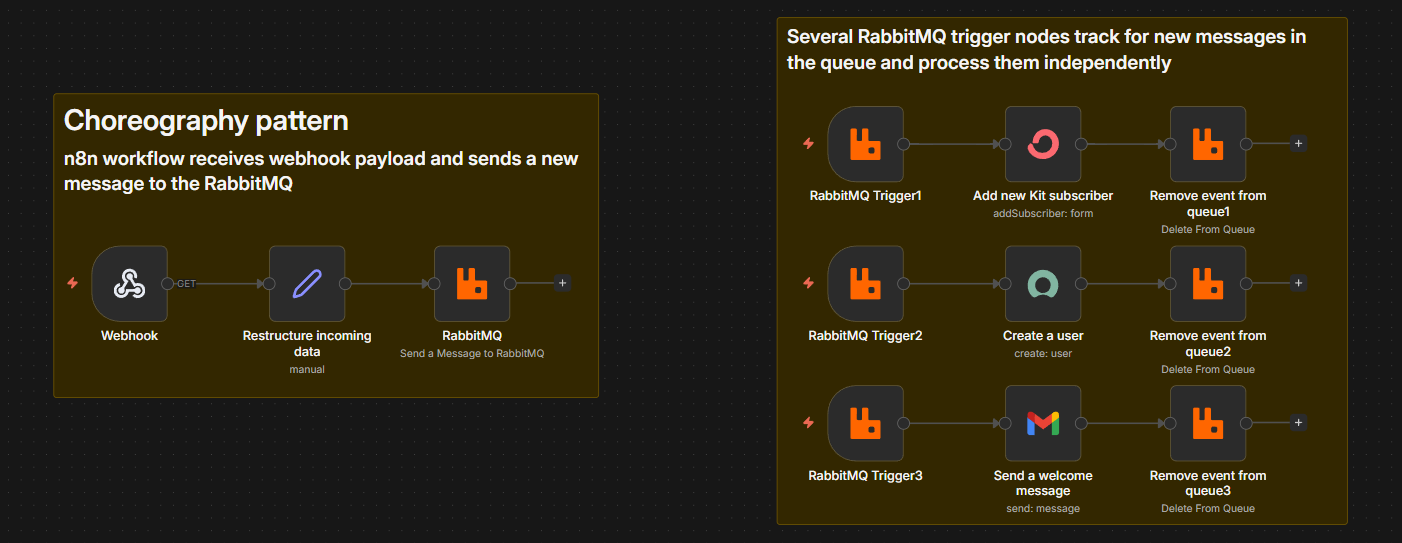
For higher-throughput scenarios, n8n connects to Kafka, RabbitMQ, or AMQP brokers while adding visual workflow orchestration on top — keeping message delivery separate from workflow logic.
4. Implement your publishers and consumers
Publishers and consumers operate independently in an EDA, without needing direct knowledge of each other. The publishers need to handle messages reliably and should never modify an event once created since this can lead to conflicting data across services. The consumers need to ensure idempotency to avoid repeated transactions, such as extra notifications or double charges.
Similarly, built-in retry methods are necessary for transient problems, such as network issues or outages. Without retries, lost or delayed events affect downstream processes.
5. Add in observability and monitoring
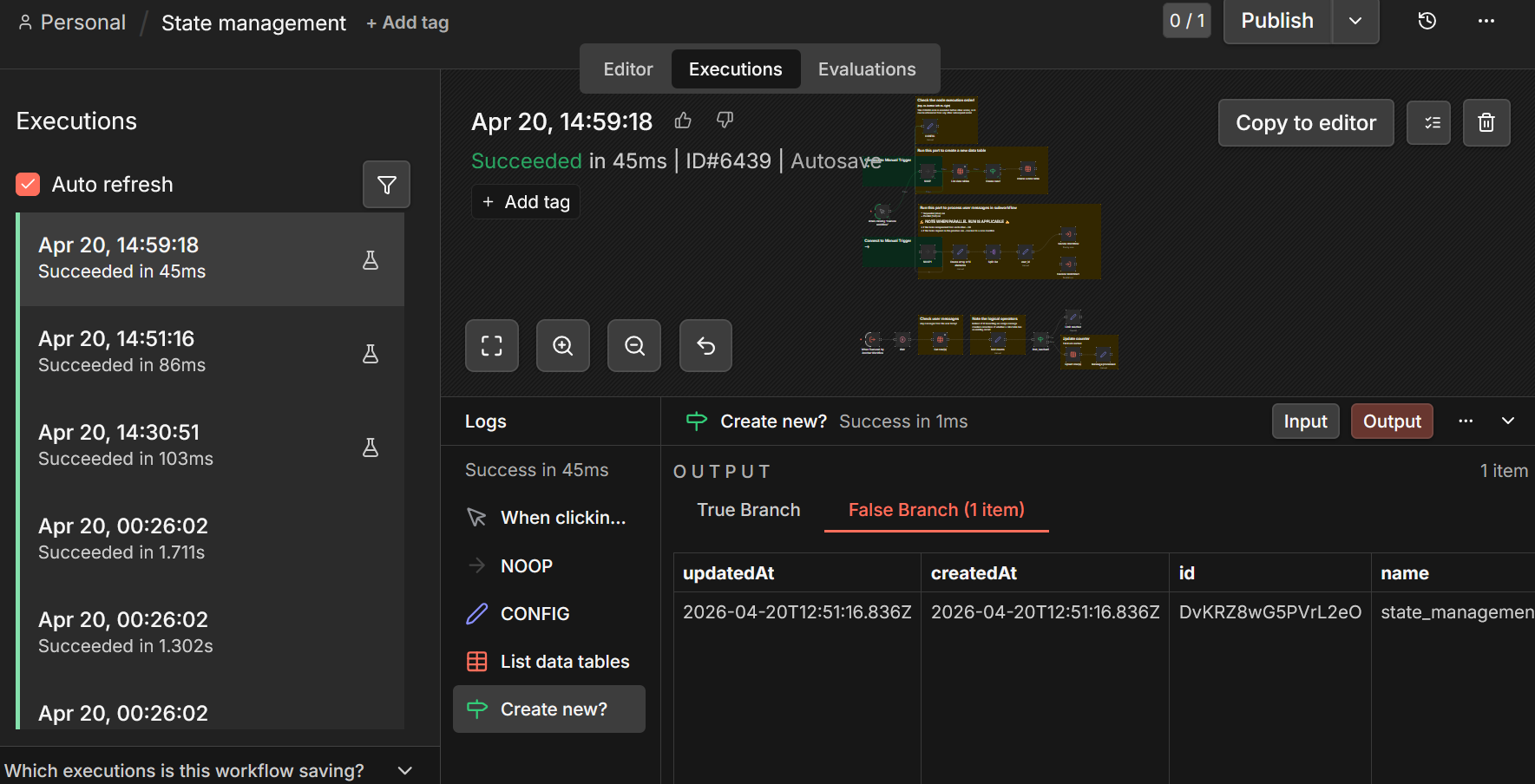
Asynchronous systems are harder to debug than synchronous ones. Without monitoring, logging, and tracing, failures can go undetected for long periods since there is no request-response cycle to expose issues. This can cause backlogs and difficulty for teams trying to pinpoint what went wrong in the pipeline.
Structured logging and distributed tracing give you a clear view of how each event moves through the pipeline. Metrics highlight unusual patterns so you can respond before delays occur.
Event-driven architecture challenges
Event-driven architecture can be powerful, but it can also introduce complexities, such as:
- Additional operational overhead from having to monitor distributed workflows
- Back-pressure management and rate limiting as event volume grows
- A need for careful versioning when schemas evolve or message formats change
- Event ordering challenges — distributed systems don't guarantee order without single partitions or sequence numbers
These challenges are manageable with the right tooling: schema registries for versioning, distributed tracing for debugging, and visual orchestration platforms like n8n for workflow visibility and automated error recovery.
Build an event-driven system that scales with you
Event-driven architecture unlocks scalability and resilience through asynchronous, decoupled services. But it doesn't have to mean deploying message broker clusters and managing distributed infrastructure.
For smaller business workflows — order processing, webhook integrations, SaaS event orchestration — n8n provides event-driven patterns through webhooks and visual routing. No Kafka deployment, no consumer code, no custom observability stack is required. Just connect events to actions through visual workflows.
When you need higher throughput, n8n integrates with existing brokers while adding workflow orchestration and better visibility on top.
Start building event-driven workflows visually. Get started for free — connect webhooks and scale from there.